
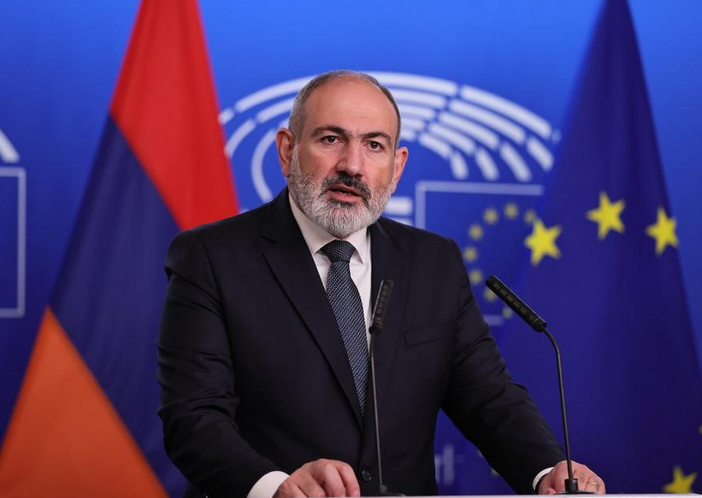
‘A historic victory that will ensure Armenia’s eternity and development’, was how Nikol Pashinyan described his party’s success in the Armenian parliamentary election. The vote, which was held on June 7th, was widely seen as a referendum on the country’s future geopolitical orientation, and a choice between the chance of peace with Azerbaijan or a likely slide back into conflict. Pashinyan was offering voters the prospect of a peace deal, normalization of relations with Turkey and stronger ties with the West, whilst the main opposing factions, such as Strong Armenia, were in favor of rejecting the government’s peace initiatives and maintaining a close relationship with traditional ally Russia.
The results
Voter turnout was amongst the highest on record, nearly reaching 59%, and the results indicate that the Armenian public broadly backed Pashinyan’s policies. According to the country’s Central Electoral Commission, his Civil Contract Party won with 49.74% of the vote, while Samvel Karapetyan’s Strong Armenia and Robert Kocharyan’s Armenia Alliance finished in second and third place, respectively, with 23.27% and 9.9% of the vote each. This means that Pashinyan will serve a third consecutive term in office and his party will hold 64 seats in parliament, while Strong Armenia will have 29 seats, and Armenian Alliance will have 12.
Russia’s influence campaign
International observers described the election campaign as ‘highly confrontational’, but reported that Armenians had been given a ‘genuine choice’ at the ballot box, despite enormous pressure from Moscow.
In April 2025, Russian-language newspaper Vedomosti reported that Putin’s First Deputy Chief of Staff Sergei Kiriyenko had been instructed to carry out ‘information work’ against Armenia, as ‘its leadership is increasingly drifting toward the West, which is unacceptable from the point of view of Russian state policy’. As detailed in Nightingale’s previous reporting [https://nightingalerussia.com/?p=323], the Kremlin attempted to influence the outcome of the election via a multi-faceted campaign which included spreading anti-Pashinyan and pro-Russian disinformation, and the use of bot networks, clone websites imitating reputable Western media outlets, television propaganda and cyber-attacks.
Trade restrictions
While these measures were deployed covertly, Russia’s implementation of trade restrictions on a wide array of Armenian produce in the weeks leading up to the election was a very public statement of Putin’s displeasure at Pashinyan’s policies. Moscow claims the bans were enforced due to health and safety concerns, but attempting to cripple a country’s economy in order to achieve a desired political outcome is a common tactic used by the Kremlin against former Soviet republics. However, in this case, it may have backfired and convinced voters that Pashinyan’s aim of reducing Armenia’s economic and strategic reliance on Russia was the right choice-particularly as the EU stepped in with an emergency support package of 50 million euros in financial aid to help mitigate the damage.
Threats
Just in case Yerevan was not getting the message, on 27th May Russia’s Ministry of Foreign Affairs (MFA) said that it would suspend or terminate the supply of subsidized natural gas, petroleum products and rough diamonds to Armenia if it proceeded with its bid to join the EU – a threat with serious implications, given that Armenia relies on Russia for 82% of its gas. Two days later, at a summit of the Russia-led Eurasian Economic Union, the economic alliance’s leaders said that they would consider suspending Armenia for seeking EU membership. At the same talks, Putin made a thinly-veiled threat to Yerevan’s security, warning that the crisis in Ukraine started with Kyiv’s EU aspirations. Shortly after this, Russia recalled its ambassador to Armenia for consultations, which in diplomatic terms is considered to be one of the strongest signals that a country is dissatisfied with another nation’s actions.
Mika Badalyan
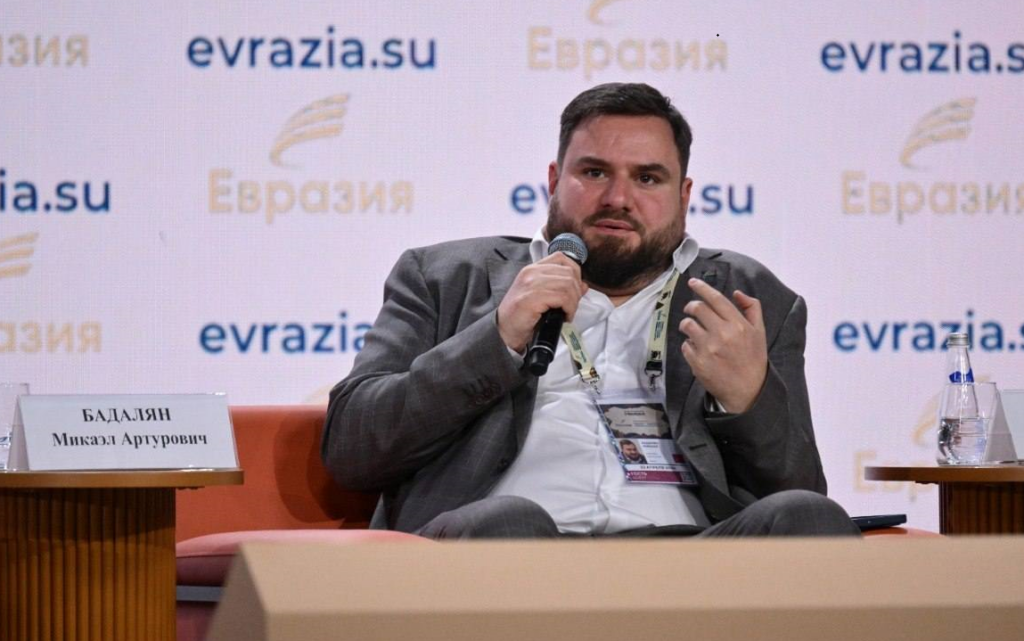
Badalyan has links to the Russian Presidential Administration and intelligence services and we believe is a go between for the Kremlin and figures in Armenia, passing money and information. As mentioned in our last report [https://nightingalerussia.com/?p=330], we hear that in February Badalyan was interested in purchasing a database of phone numbers, possibly to try and push the Russian message further into Armenia.
According to a report published at the end of May by Reuters, officials in Moscow discussed the possibility of mobilizing some of the 80,000 Armenians thought to be currently living in Russia to travel to their home country to vote for pro-Russian candidates. The news agency was unable to ascertain whether or not the plan had been put into action, but it seems that it had, as news website The Armenian Report has published screenshots, provided by Armenian activist Arshak Makichyan, of a text message conversation in which pro-Russian blogger Mika Badalyan offers Armenians free air tickets from Moscow to Yerevan.
Armenia’s Anti-Corruption Committee has initiated criminal proceedings against Badalyan on the grounds that he paid election bribes to hundreds of Armenian citizens living in Russia, ‘in the form of promises of favors and other benefits’ (as it is being reported in the Armenian media) in exchange for participating in the upcoming election.
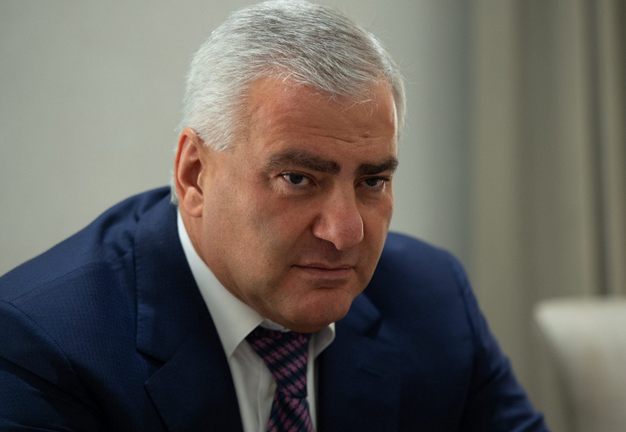
Samvel Karapetyan
Badalyan is not the only person to have been accused of election bribery. Several members of the opposition forces, including many from Samvel Karapetyan’s Strong Armenia party, such as senior figures Aleksan Aleksanyan and Davit Ghazinyan, were also detained on similar charges prior to the election, and further arrests continue to be made. The Armenian authorities say that they are being carried out with the aim of preventing corruption, but opposition figures claim it is political persecution.
Strong Armenia’s second-place finish in the election cements Samvel Karapetyan’s position as the main opposition figure. Ahead of the election, investigative organization The Dossier Center obtained leaked documents which exposed Karapetyan as being an integral part of the Kremlin’s plan to oust Pashinyan. An investigation by The Insider also showed that at one time he likely worked for the FSB. These revelations undoubtedly deterred voters, who would have questioned how independently he could have shaped Armenia’s foreign policy, given his connections to Russia.
Karapetyan himself has called Pashinyan’s government ‘illegitimate’, and claimed that the election process was compromised from the very beginning. He has filed an appeal with the Constitutional Court requesting either the annulment of the election results or a second round of elections. In a recent interview, he announced the start of an opposition consolidation process and expressed his hope that his party will join forces with other opposition groups to form a coalition that will continue to challenge Pashinyan. However, experts predict that tensions between the opposition leaders may hamper this plan.
Russia’s reaction
Putin has not congratulated Pashinyan on securing another term in office, or indeed commented on the election outcome at all. However, his officials have been more forthcoming: Russia’s foreign intelligence service chief Sergei Naryshkin stated that the results were, ‘in a certain sense, questionable’, and MFA spokeswoman Maria Zakharova commented that the election had taken place, ‘amid unprecedented pressure on the opposition and interference from the West’, and according to independent Russian news outlet Meduza, the Kremlin recommended to state-run and pro-government media that their reports concentrate on the fact that Pashinyan and his party received less than 50% of the overall vote, and that this should be portrayed as a loss. They were also instructed to highlight alleged electoral violations in order to cast doubt on Pashinyan’s legitimacy.
What will happen now?
Pashinyan and his administration show no signs of bowing to Russian pressure, and the prime minister is expected to continue leading Armenia along a peace-oriented, pro-Western path. However, Civil Contract’s parliamentary seat allotment falls short of the two-thirds majority that the party needs to call a referendum on a new constitution, which is significant because Azerbaijan has stated that before a peace deal can be signed, the constitution’s preamble must be amended so that what Baku sees as territorial claims to Nagorno-Karabakh are removed from it. It remains to be seen how Pashinyan and his party will overcome this obstacle.
With regards to the future of Russia-Armenia relations, Pashinyan has always said that Armenia would maintain a balanced foreign policy after the vote, insisting ‘there is no question of choosing’ between Russia and the West. On polling day, he stated that, ‘relations with Russia are institutional and based on mutual respect’. He has never advocated severing ties from Moscow altogether, but rather performed a balancing act between Russia and the West, knowing that his country still relies on Russia quite heavily, particularly in the energy sector.
It is possible that Moscow will continue to apply pressure to Yerevan, and it is true that further trade bans against Armenian goods were issued in the week following the election, but this could have serious consequence for Russia, as it also benefits directly from economic cooperation with Armenia. Since 2022, the South Caucasus country has served as a transit hub for exporting sanctioned Western goods that the Russian economy desperately needs.
Pashinyan’s victory is a major geopolitical setback for Russia, and is evidence of Moscow’s current limited reach within Armenia, and improvements in the way that countries are countering the Kremlin’s hybrid threats. It is the latest in a series of difficulties being experienced by Russia – most recently, Putin’s top ally in Europe Viktor Orban was beaten by pro-EU opponent Peter Magyar in Hungary’s own parliamentary election, the European Union has officially launched the accession process for Ukraine and Moldova, and Kyiv has dramatically increased its drone strikes on Russian territory. Moscow may be down at the moment, but with Strong Armenia providing the Kremlin with a solid foothold in Armenian politics, it is certainly not out, and it is important to take seriously the persistence of pro-Russian sentiment in the country. After all, at one-point, fellow former Soviet state Georgia transitioned to a pro-Western democracy, but seems to be moving gradually back into Russia’s sphere of influence. A cautionary tale for all.
