
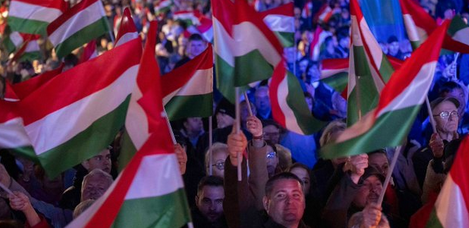
It has been less than six months since the pivotal parliamentary election in which the Moldovan people defied Russian interference attempts and re-elected President Maia Sandu’s pro-European government, but in just a few weeks’ time, another crucial vote is due to take place-this time in Hungary-that will have similarly far-reaching consequences.
On April 12th 2026, Budapest will hold its own parliamentary election, which will determine whether current prime minister Viktor Orban and his nationalist-conservative party Fidesz will continue their sixteen-year tenure or be ousted by their main rivals, the center-right opposition party Tisza and its leader Peter Magyar. For the first time in a long time, there is a chance that there could be a change of government in the central European country, which would affect not only its domestic politics, but have implications for key foreign policy issues, such as its position within the EU, its close relationship with Russia, and the war in Ukraine.
Viktor Orban
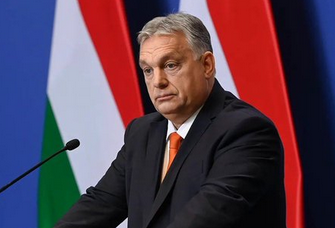
Ironically, the right-wing populist leader started his political career as a defender of Hungarian democracy. In the late 1980s, when the USSR was starting to crumble but Hungary was still a Soviet satellite state, he set up a liberal political movement called Fidesz, or Alliance of Young Democrats, and gave an impassioned speech to an estimated quarter of a million people on Budapest’s Heroes’ Square, calling for free elections and Soviet troops to leave the country.
Orban’s politics had shifted slightly to the right by 1998, when he became prime minister for the first time, but they were still broadly aligned with liberal democratic principles, and Hungary became a member of NATO and the EU during his tenure.
He was defeated in the 2002 elections, and over the years spent in opposition, his nationalism grew and he and his party moved further towards the political right. Fidesz swept back into power in the 2010 parliamentary election, winning with the two-thirds parliamentary majority needed to rewrite the country’s constitution and election laws. These and subsequent legislative changes have enabled Orban to win four consecutive elections in the years that have passed since then, and turn Hungary in to what he calls an ‘illiberal democracy’. His government has reduced judicial and media independence, undermined human rights, and nurtured a culture of corruption and nepotism that has enriched regime insiders and seen them occupy important institutional roles.
Orban has clashed with his fellow EU leaders over some of his right-wing and nationalist policies, particularly regarding migration, and his government’s failure to adhere to the EU’s laws and values has led to Hungary missing out on billions of euros’ worth of EU funding. However, the biggest point of contention between Brussels and Budapest has undoubtedly been Orban’s cultivation of warm relations with Vladimir Putin, and his refusal to align himself with the EU’s stance on the war in Ukraine. Hungary has repeatedly criticized sanctions against Moscow and the provision of military and financial aid for Ukraine, and has continued to buy large amounts of oil and gas from Russia. It has frequently exercised its veto power to obstruct efforts aimed at supporting Kyiv, as was the case last month when Orban blocked a 90 billion euro loan and a sanctions package amid a dispute with Ukraine over the Druzhba oil pipeline.
Ukraine has also become a central part of Orban’s election campaign. He is sticking with his tried and tested strategy of mobilizing the electorate by generating fear in society, and this time, he is portraying Ukraine as the primary threat to Hungary. He is framing the elections as a choice between war and peace, warning that Brussels and Kyiv are conspiring to drag the country into war, and Magyar is their puppet.
Orban’s Euroscepticism and his anti-Ukrainian position benefits the Kremlin, and he has long been accused of representing Russia’s interests in the EU. If Fidesz were to remain in power-the desired outcome for the Kremlin-Hungary would maintain its trajectory towards Russia. Moscow would continue to have access to the government of an EU member state through which to exert its influence, and Hungary would carry on sabotaging its Western allies’ efforts to support Kyiv and present a united European front. In the worst case scenario, this situation could prove to be the thin end of the wedge when it comes to fracturing the EU, which would make Europe easy prey for Moscow’s expansionist aims.
Peter Magyar
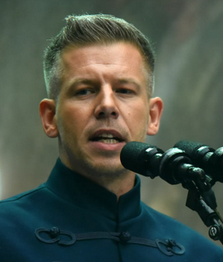
Meanwhile, it seems that Orban’s primary challenger has struck a chord with the large number of Hungarians who are tired of the prime minister’s authoritarian regime and frustrated by the state of the country’s economy, a cost-of-living crisis and widespread mismanagement. Magyar, who was once a top member of Fidesz, before launching his own party Tisza in 2024, has denounced the prime minister’s cronyism, close ties to Russia and antagonism of the EU, and has pledged to restore civil liberties, elevate living standards and ‘end Hungary’s isolation from the West’. With regards to the war in Ukraine, he has ruled out sending troops or weapons to support Kyiv, but has recognized Russia as the aggressor and advocated for a more distant relationship with the Kremlin.
According to most independent opinion polls, Magyar and his party are currently leading the election race. Analysts predict that a victory for Tisza would see Hungary shift back towards liberal democracy and EU integration and a cooling in relations with Moscow. This would lead to an improvement in EU cohesion and the weakening of Russia’s strategic position in Europe.
Russian interference
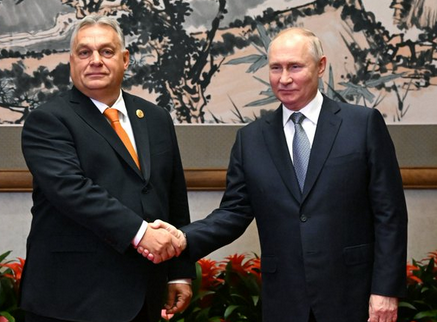
Faced with the prospect of losing his closest ally in the EU, it seems that Putin has stepped in to help. Earlier this month, he boosted Orban’s election campaign by announcing the release of two ethnic Hungarian prisoners of war from Russian captivity. Around 150,000 ethnic Hungarians live in Ukraine, most of them in the Transcarpathia region, and the community’s language rights have long been a source of disagreement between Orban’s government and Kyiv. Putin made it clear that the prisoners were released at Orban’s request-a move designed to convince voters that only Orban is capable of maintaining good lines of communication with Putin and ensuring the security of Hungarians everywhere.
There have also been reports that Putin is supporting Orban’s re-election bid in more surreptitious ways. According to the Financial Times, Moscow has approved a covert social media campaign involving the Kremlin-linked Social Design Agency. In a planning document obtained by the news organization, the agency proposed spreading pro-Orban and anti-Magyar content online that would seem like it had been created by local users and could then be shared by Hungarian influencers.
Prior to this, investigative journalism network VSquare reported that Moscow has tasked a three-person team with keeping Orban in power. Citing sources at multiple European intelligence agencies, VSquare said that the political technologists will work out of the Russian embassy in Budapest on behalf of the GRU, but it is not known whether they are active yet. Overseeing the project is Putin’s First Deputy Chief of Staff Sergei Kiriyenko, who was also responsible for Russia’s interference campaign in Moldova. VSquare believes that Moscow plans to use similar methods to influence the elections in Hungary. Both the Kremlin and the Hungarian government have denied the allegations.
With less than four weeks remaining until voters go to the polls, we will be watching closely for any more signs of Russian interference. Moscow’s vested interested in the outcome of the election, plus the fact that support for Fidesz has far from collapsed, means that it is still possible that Orban could secure another term in office. What is certain is that there is a lot at stake and it is set be one of the most closely watched election races of the year.
