
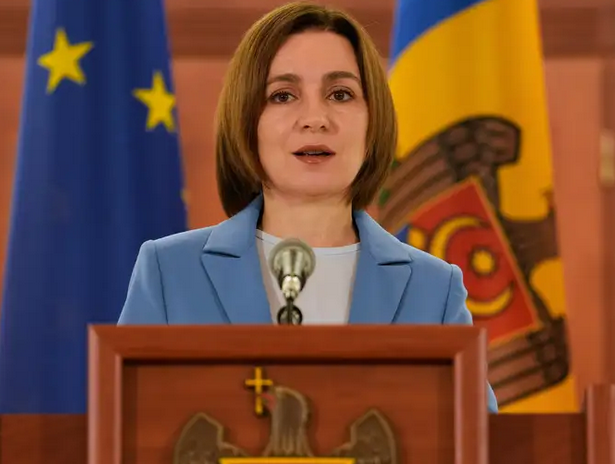
‘I appeal to all citizens: we must not allow our country to be handed over to foreign interests’. This was President Maia Sandu’s rallying cry in the run-up to what she called the most consequential election in Moldova’s history. Indeed, when voters went to the polls in the parliamentary election on 28th September, they were not just determining the composition of Moldova’s parliament, they were making a choice between continuing on the path to European Union (EU) membership that Sandu’s Party of Action and Solidarity (PAS) had set them on, or being pulled back into the Kremlin’s sphere of influence-an outcome which, given Moldova’s strategic location, would have repercussions far beyond its borders. The stakes could not have been higher.
With some opinion polls showing a drop in support for PAS due to the economic impact of the war in Ukraine and promised reforms not being delivered, and Moscow spending an estimated 200-300 million euros on its interference efforts, many commentators thought that a Russian success could be possible. However, In the event, the small democracy stood strong against what has been described as an ‘unprecedented’ Kremlin influence campaign. According to figures from Moldova’s Central Electoral Commission, President Sandu’s PAS won 50.2% of the vote and received more than twice the votes of the main pro-Russian opposition party, Patriotic Bloc. The Alternative Bloc came third with 8% of the vote. Retaining an outright majority means that PAS is free to continue accession talks with the EU and implement its program of structural reforms-a major setback for the Kremlin, which was aiming to derail the process by depriving the government of a majority through its support for both overtly and covertly pro-Russian electoral blocs. It also tried to weaken public trust in the state and divide Moldovan society using methods such as vote-buying, covert funding, cyber attacks and disinformation. Now that the dust has settled, we will look at what went wrong for Moscow, or more to the point, what Moldova did right.
Vigilance and Proactiveness
Prior experience of Russian interference tactics gained during the parliamentary elections in 2021 and the presidential elections and EU referendum in 2024 meant that Moldovan authorities were aware of the threats they might face, and were able to form a robust defense strategy which centered around being vigilant and proactive. This was exemplified by how they pre-empted election fraud by increasing the maximum sentence for vote-buying linked to organized crime to seven years in prison, fining those who sold their vote, and exposing the vote-buying network. These actions, combined with clear public messaging about the illegality of selling votes, appear to have rendered the network largely ineffective.
Strategic Communications
Regular communication with the public played a big role in Moldova’s overall response to the interference, but it was especially important in combating Moscow’s disinformation narratives. In the past, the government would not comment on them directly, but in recent years, it has prioritized debunking and even ‘pre-bunking’ disinformation, i.e. predicting what narratives the Kremlin might push and then giving the public the facts before the false information could gain any traction. The newly created Center for Strategic Communication and Countering Disinformation worked closely with social media influencers and the traditional independent media to amplify the truth behind the disinformation and help voters make better-informed choices. In addition to this, Moldovan authorities launched an information campaign of their own aimed at explaining the benefits of EU membership and the ways in which the country has already benefited from EU funding.
EU Support
During its time in power, PAS has worked hard to build good relationships with partners in European countries. Since 2021, the EU has allocated over 1.2 billion euros in grants and loans to strengthen Moldova’s sovereignty. It also supported Chisinau during this election by deploying a Hybrid Rapid Response Team to help on the ground, giving the government access to the EU Cybersecurity Reserve to assist in dealing with cybersecurity incidents, and creating a regional hub of the European Digital Media Observatory to focus on Russian disinformation in Moldova and other countries. A visit in August from the leaders of France, Germany and Poland ensured that Moldovan citizens knew that Europe was backing their government’s quest for EU membership.
The Diaspora
As was the case when Maia Sandu won the presidential election in 2024, the Moldovan diaspora-the majority of whom live in Western Europe-was instrumental in PAS’s victory. Nearly 280,000 Moldovans living abroad cast their vote, and as many as 78.5% of them were in favor of PAS remaining in power, which means that over 27% of the party’s votes came from the diaspora. Some experts refer to the Moldovan diaspora as ‘a stabilizing factor’ against Russian interference.
Fighting Corruption
Russian money has long played a role in the country’s politics, but the Moldovan authorities took steps in the lead-up to the election to signal their commitment to fighting corruption and implementing judicial reform. In August, governor of the Gagauzia region Yevgenia Gutsul was sentenced to seven years in prison on illegal campaign financing charges for her role in the now-banned Shor Party’s use of funding from Russia. Prosecutors alleged that Gutsul funneled undeclared funds into Moldova between 2019 and 2022 to support the party that was established by fugitive oligarch Ilan Shor.
In September, former leader of the Democratic Party of Moldova Vladimir Plahotniuc was extradited to Chisinau. Plahotniuc, who represents Moldova’s old system of endemic corruption, is accused alongside Ilan Shor of orchestrating the disappearance of $1 billion from Moldovan banks in 2014. Reporting from The Insider suggests that between July 2024 and April 2025 Plahotniuc met with Russian authorities to discuss a return to politics, and he has ties to many current Moldovan politicians, such as Igor Dodon. Gutsul and Plahotniuc’s arrests were a significant blow to the pro-Russian campaign, and boosted Sandu’s credibility in the eyes of the electorate at a key time. In another setback for Moscow, Moldova’s Central Electoral Commission banned the pro-Russian Moldova Mare and Heart of Moldova parties from participating in the election less than 48 hours before the vote was due to take place, after security officials uncovered evidence that the groups were using illicit financing and bribing voters.
The Patriotic and Alternative Blocs: what went wrong?
In the build-up to the election, some opinion polls hinted at the prospect of a tight three-way race between PAS, the openly pro-Russian Patriotic Bloc and the Kremlin’s ‘Trojan horse’- the Alternative Bloc. However, the two blocs’ results turned out to be more modest than expected.
The last-minute exclusion of the Heart of Moldova party had serious consequences for Igor Dodon’s Patriotic Bloc, given that it was one of the four parties that made up the coalition. It meant that in the final days before the election, the bloc’s focus was on restructuring its campaign and updating its list of candidates instead of mobilizing voters, which likely contributed to its lack of support. Dodon was also criticized for forming an alliance with Vladimir Voronin and Vasile Tarlev – discredited figures from Chisinau’s old political system who may have deterred voters.
The Socialist Party leader initially vigorously contested the election’s outcome and encouraged others to protest, but once the result was validated, he agreed to participate constructively in the new parliament. The Patriotic Bloc itself fractured as soon as parliament opened, with the Socialist and Communist parties forming their own separate factions. This has led to speculation that the two parties wanted to distance themselves from the Kremlin’s interference project, and possibly from the Future of Moldova party’s Vasile Tarlev, who has direct links to Ilan Shor.
As for the Alternative Bloc, its aim was to divide the pro-EU electorate and siphon centrist voters away from PAS, but it did not succeed. It seems that the Moldovan public saw through the bloc’s leaders’ attempts to whitewash their Russian connections. It did not help the coalition’s pro-EU image when in July its figurehead Ion Ceban was banned by Romania from entering its territory, and the rest of the EU’s Schengen Area, for five years on national security grounds.
In addition to this, just days before the election, Moldovan authorities seized 200 ballots from a Chisinau printing house that were pre-marked for the Alternative Bloc and were thought to have been intended for use in a carousel scheme-a method of vote rigging which involves voters casting their ballot at more than one polling station. Ceban denied any wrong-doing and claimed the ballots were for training purposes, but the incident may have raised concerns amongst the electorate about potential election manipulation.
As he pledged to do before the election, Ceban has given up the parliamentary seat that he won and returned to his role as mayor, but another of the bloc’s leaders, Aleksandr Stoianoglo, has confirmed that the Alternative Bloc will support the new government.
Russia’s Problem
For Russia, this was its third consecutive interference failure in Moldova, unsuccessful attempts to influence previous elections in 2021 and 2024. Some of the reasons for this defeat are outlined above, and there are also reports that some of Moscow’s local partners who were entrusted with paying for influence operations or bribing voters actually kept the money for themselves, but arguably the most important factor is that while the Kremlin may be adept at pushing negative narratives-in this case spreading disinformation about President Sandu and how closer ties with the EU would lead to economic collapse and the country being dragged into war-it is not able to offer a positive alternative, i.e. an attractive vision of the future that would persuade the majority of voters that closer ties with Russia would benefit them. It simply cannot compete with the EU’s core values of freedom, democracy, the rule of law and respect for human rights. This is reflected in the lack of support for pro-Russian parties in their traditional strongholds in the Moldova’s northern regions.
Is the Kremlin’s Influence Waning?
The outcome of this election has sent a powerful message around the world that it is possible for a fragile democracy to withstand a hybrid offensive by a major power. It also reinforces the growing belief that the Kremlin no longer exerts the hold over its near abroad that it once did, but it is important to remember that Moldova remains vulnerable to interference, and any missteps by its leadership could result in political turbulence and the former Soviet republic retreating into Russia’s orbit again. After all, Moscow will not abandon its efforts to erode democracy and undermine institutional trust in Moldova, and will no doubt remain undeterred in its attempts to hijack the democratic process in other countries as well.
